
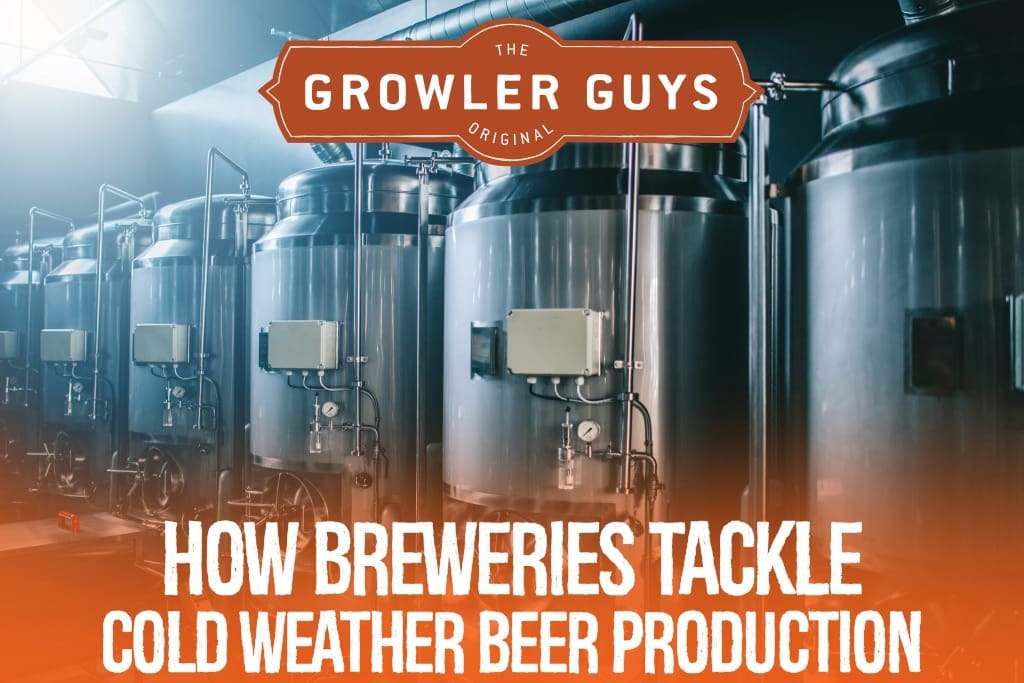
When the temperature drops and the snow falls, most beer lovers are thinking about cozying up with a heavy imperial stout. But for the brewers behind your favorite pints, the seasonal shift marks the start of a high-stakes game of thermal chess: cold-weather beer production.
At The Growler Guys, we’ve seen firsthand how breweries tackle this logistical challenge. From protecting sensitive equipment to leveraging nature’s chill, here’s a look at how breweries keep the taps flowing.
How Do Breweries Winterize Equipment and Infrastructure?
The biggest threat to cold-weather beer production is equipment failure. Breweries rely heavily on water and compressed air, both of which are notoriously sensitive to freezing temperatures.
Industrial air compressors power everything from keg washers to canning lines in a brewery. This essential equipment can malfunction if the building’s temperature drops below 40°F. One of the biggest concerns is the oil inside the air compressors – it can thicken during the winter, reducing lubrication efficiency and forcing the motors to work harder. Brewers stay ahead of this by:
- Applying heat-trace tape to vulnerable external pipes
- Insulating storage tanks and glycol lines to prevent energy loss
- Recirculating warm air within the brewhouse to keep sensitive electronics from sweating due to condensation
Winterizing their infrastructure helps brewers make sure a sudden cold snap doesn’t lead to a catastrophic (and expensive) halt in production.
What Is Lagering and Cold Crashing in Cold-Weather Beer Production?
The cold presents some challenges, but it also presents a natural advantage for some beer styles. Historically, winter was the only time of year brewers could produce lagers. Even with today’s modern refrigeration, many breweries lean into the season to optimize their cold-weather beer production.
The Art of Lagering
Since lager yeasts thrive in cool environments (typically 45–55°F) and require a long, cold conditioning period, breweries tend to shift their production schedules to focus on crisp Pilsners and Doppelbocks when the ambient air helps do the work.
Natural Cold Crashing
Many breweries use the ambient outdoor temperature to “cold crash” their beer. When the temperature of the fermentation vessel drops rapidly, the remaining yeast clumps together and falls to the bottom. Letting Mother Nature do the heavy lifting like this helps save on energy costs while producing crystal-clear beer.
How Do Breweries Handle Logistics and Distribution for Cold-Weather Beer Production?
The work doesn’t end once the beer is in the keg. In fact, some of the hardest parts of cold-weather beer production happen on the loading dock. Maintaining a temperature-controlled supply chain (or a “cold chain”) is essential to preserving the delicate hop oils in your favorite IPAs. During the winter, logistics teams have to navigate:
- Thermal Protection: Reflective, foil-lined pallet covers and thermal blankets protect the beer from freezing during transit. If a beer freezes in the can, the liquid expands, which can cause leaky seals or burst containers.
- Route Optimization: Real-time tracking helps avoid mountain passes or areas hit by snowstorms, preventing a truckload of beer from idling in sub-zero temperatures for days.
- Ingredient Stability: Hops and yeast shipments are monitored to make sure they arrive at the brewery with their aromatic compounds intact.
Master the Chill at The Growler Guys
The next time you’re sitting at your local Growler Guys with a seasonal pour, take a minute to appreciate the engineering and effort in your glass. Whether it’s a cozy Winter Warmer or a crisp lager that spent months conditioning in the cold, that pint is the result of a brewer successfully outsmarting the elements.
There’s no better place to experience the fruits of cold-weather beer production than your local Growler Guys. Our extensive rotating tap list features the best local and global winter brews. Not sure where to start? Our certified Beer Stewards are happy to put together a curated flight for you. Stop in and celebrate the science of the season with a pint, flight, or growler fill today.
Reader Interactions